
12 Questions to Ask When You Tour an Assisted Living Community
Recent Articles



- July 22, 2026
- Vista Prairie
If you are preparing to tour an assisted living community, asking the right questions can help you determine whether it is the right fit for your loved one. The best questions go beyond amenities and focus on care, safety, staff, communication, and how the community supports residents.
Touring a community is an exciting step, but it can also feel overwhelming. Families often arrive with a long list of concerns and leave realizing they forgot to ask some of the most important questions. Beautiful common areas and welcoming staff certainly matter, but they only tell part of the story.
A thoughtful tour should help you understand how residents are cared for each day and how the team responds when needs change. It must ensure that your loved one will feel safe, supported, and connected.
This guide discusses such questions in detail. Below is a list of questions to ask when touring an assisted living community.
Why is it Important to Ask Questions During an Assisted Living Tour?
Every assisted living community is unique. While many offer similar services on paper, the quality of care, resident experience, and overall culture can vary significantly. Asking detailed questions allows families to move beyond brochures and marketing materials.
It helps reveal how a community operates and supports residents. Asking questions can also help you understand if the community aligns with your loved one’s needs and preferences. The answers should leave you feeling informed rather than uncertain.
A community that welcomes thoughtful questions and provides clear, transparent responses is often one that values open communication and strong family partnerships. To help you in the process, we have created a list of 12 questions below, explaining why to ask these.
1. What Services are Included in the Monthly Fee?
Understanding exactly what is included in the monthly cost is one of the first questions every family should ask. While pricing may appear similar between communities, the services included can differ considerably.
A good answer should clearly explain what is covered, such as meals, housekeeping, transportation, medication management, wellness programs, and assistance with activities of daily living. Staff should also explain any services that involve additional fees.
2. How is Each Resident’s Care Plan Developed?
Every older adult has unique health needs, preferences, and routines. A personalized care plan ensures that support is tailored to the individual rather than applying the same approach to every resident.
A strong community will describe a comprehensive assessment process before move-in and explain how care plans are reviewed and updated as needs evolve. Families should also understand how residents and loved ones are involved in these discussions.
3. How are Care Needs Reassessed Over Time?
A parent’s needs rarely remain the same over the years. Asking how a community monitors changing health conditions can provide valuable insight into the continuity of care residents receive.
A good answer should include regular care assessments, ongoing communication with families, and a proactive approach to adjusting services. Moreover, a process should be in place that ensures the changes are made before small concerns become larger challenges.
4. What is the Staff’s Availability Throughout the Day and Night?
One of the greatest benefits of assisted living is knowing that help is available whenever it is needed. Rather than focusing solely on staffing ratios, ask how caregivers respond to resident requests.
You should also ask if licensed nurses are available and how support is provided during evenings, overnight hours, weekends, and holidays. A reassuring answer should demonstrate that residents have reliable access to compassionate assistance 24 hours a day.
5. What Happens if My Loved One’s Care Needs Change?
Health needs naturally evolve as people age. Choosing a community that can adapt to those changes can reduce future stress for both residents and families. Look for communities that explain how care levels are adjusted and if additional support can be provided without requiring an immediate move. It is also helpful to ask when a transition to another level of care, such as Memory Care or Care Suites, may become appropriate.
6. How does the Community Support Residents Living With Memory Changes?
Even if your loved one does not currently have dementia, understanding how the community approaches cognitive changes can provide peace of mind for the future. A good answer should explain how staff recognize early signs of memory decline.
It should also cover how families are involved in care planning and what options are available if specialized Memory Care becomes necessary. Communities that offer multiple levels of care often provide a smoother transition if needs change over time.
7. How does the Community Keep Residents Safe While Supporting Independence?
Safety is often one of the biggest concerns families have when considering assisted living. At the same time, older adults want to maintain as much independence as possible. Ask how the community balances these priorities.
A thoughtful response should include information on emergency response systems, staff availability, building security, fall-prevention strategies, and technology that enhances safety without limiting resident choice.
8. What Activities and Opportunities for Social Engagement are Available?
A fulfilling lifestyle extends far beyond receiving assistance with daily tasks. Meaningful social interaction, physical activity, lifelong learning, and personal interests all contribute to emotional and physical well-being.
Ask to see the community calendar and learn how activities are adapted to different interests and abilities. A good community should offer opportunities for residents to remain active while encouraging genuine friendships and a sense of belonging.
9. How does the Community Communicate With Families?
Families often feel more comfortable when they know how information will be shared after a loved one moves in. You can ask about team communication regarding changes in health, care updates, scheduled meetings, or unexpected situations. Communities that prioritize regular communication help families remain informed and involved throughout the resident’s journey.
10. What Training do Caregivers Receive?
Compassion is essential, but ongoing education is equally important. Inquire how caregivers are trained, how frequently continuing education occurs, and what preparation staff receive for supporting older adults with changing physical or cognitive needs. A strong answer ensures an ongoing commitment to professional development and high-quality care.
11. What is Everyday Life Like for Residents?
While scheduled activities are important, everyday experiences often reveal the true culture of a community. Observe how staff interact with residents during your visit. Notice whether conversations feel warm and respectful and whether residents appear engaged.
The goal is to understand if the atmosphere feels welcoming and relaxed. Do not hesitate to ask residents or family members about their experiences if the opportunity arises. Their perspectives can offer valuable insight into daily life within the community.
12. Why do Families Choose this Community?
Ending your tour with this question allows the team to explain what makes their community unique. Listen for answers that focus on resident relationships, personalized care, experienced staff, meaningful engagement, and long-term support rather than simply listing amenities. A good community will describe how it helps residents maintain dignity, independence, and purpose while giving families peace of mind.
What Should You Observe During Your Tour?
The questions you ask are important, but your observations matter just as much. As you walk through the community, pay attention to details that reflect everyday life. Some key areas you can consider are:
- Residents appear comfortable and engaged
- Staff greet residents by name
- Common areas are clean, welcoming, and well-maintained
- Residents are participating in activities or conversations
- Dining spaces feel inviting and enjoyable
- The overall atmosphere feels warm, respectful, and home-like
Often, the small interactions you witness provide the clearest picture of the community’s culture.
Download Your Assisted Living Tour Checklist
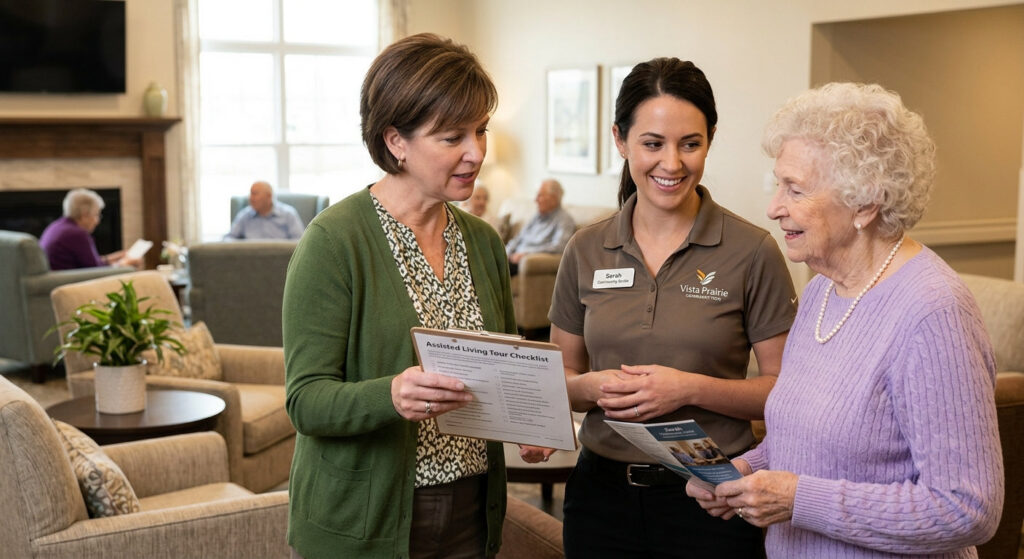
Keeping track of information from multiple community visits can quickly become challenging. Before your tours, download Vista Prairie’s Assisted Living Tour Checklist. It includes all 12 questions with space to record observations, compare communities, and note follow-up questions.
It can serve as a helpful reference when discussing options with family members and making your final decision.
Finding a Community that Feels Like Home
Choosing an assisted living community is about much more than comparing floor plans or monthly costs. It is about finding a place where your loved one will feel respected, supported, and genuinely at home.
The best communities welcome questions because they understand that informed families make confident decisions. Taking time to explore how care is delivered, how residents are supported, and how relationships are built can help you identify a community that meets your requirements.
At Vista Prairie Communities, every tour is an opportunity to answer your questions, understand your family’s priorities, and help you determine whether assisted living is the right next step. Asking questions and observing the community firsthand can help you make a confident and informed decision.
If you are ready to explore assisted living, schedule a tour at Vista Prairie. Our team will take the time to answer your questions, explain care options, and help you determine whether one of our communities is the right fit for your family.
Frequently Asked Questions
What questions should I ask during an assisted living tour?
Focus on questions about care services, staffing, safety, communication, activities, pricing, and how the community supports residents as their needs change over time.
How long does an assisted living tour usually take?
Most tours last between sixty and ninety minutes, although the length may vary depending on the size of the community and the topics you would like to discuss.
Can family members participate in the tour?
Yes. Families are encouraged to attend together so everyone has the opportunity to ask questions, observe the community, and participate in the decision-making process.
Should my parents tour the community with me?
Whenever possible, yes. Including your loved one in the process allows them to experience the community firsthand, meet staff and residents, and share their thoughts about the environment.
What should I bring to an assisted living tour?
Bring a list of questions, a notebook or your tour checklist, and any information about your loved one’s care needs that may help guide the conversation.